


Have you ever wondered how many liters of milk are needed to produce a wheel of Parmigiano Reggiano? The King of Cheeses, usually sold in wedges, is the result of a slow and accurate process, extremely rigorous in its controls, with a long maturation period.
To produce a wheel, which weighs around 38-40 kilograms (this is the average weight of a substantial product, in every sense!), and which can never be less than 30 kg, approximately 550 liters of milk are needed. Quite a quantity!
It is a cheese with a very low yield, which decreases as the aging period lengthens. The average is 14 liters for every kilogram of Parmigiano Reggiano produced. It is also this low yield — and consequent concentration of elements — that allows Parmigiano Reggiano to boast exceptional nutritional characteristics.
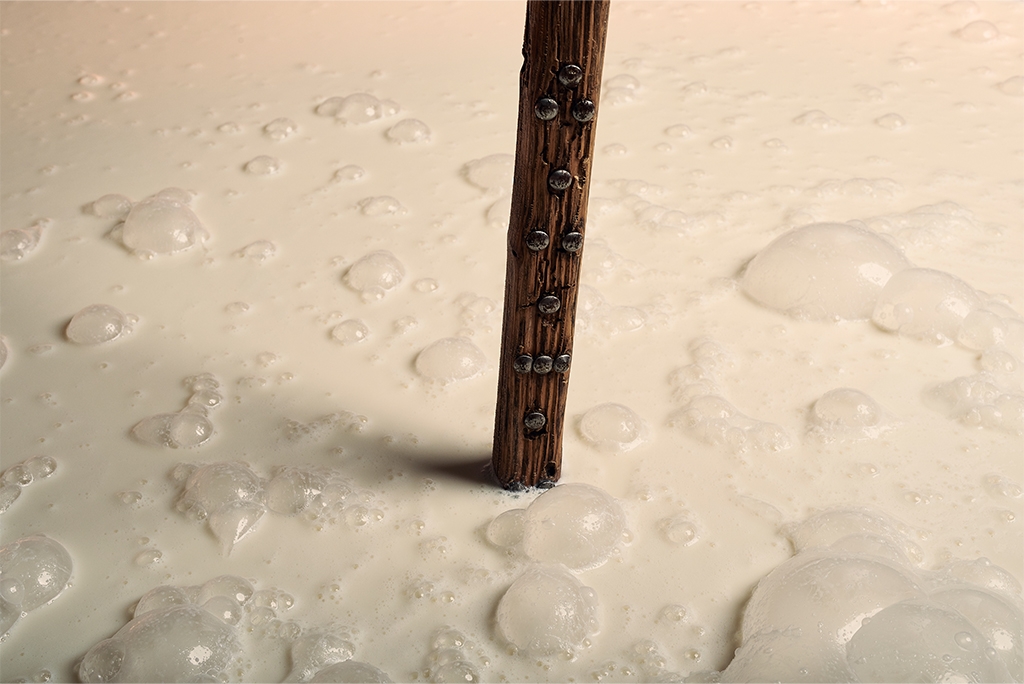
How the 550 liters of milk needed for a wheel of Parmigiano are processed
The milk milked in the morning and the previous evening is poured into the traditional copper cauldrons shaped like inverted bells. The coagulation of the milk occurs slowly and naturally, thanks to the addition of rennet and the whey starter obtained from the previous day's processing. The curd is then fragmented by the cheesemaker into small granules using a tool called a "spino."
At this point, cooking begins, reaching 54-55°C, after which the cheese granules precipitate to the bottom of the cauldron, forming a single mass. )
After about 50 minutes of cooking, the master cheesemaker proceeds to extract the cheesy mass, creating two twin wheels, which are placed in special molds, called "fascere."
Time, as well as the cheesemaker's skill, the quality, and the quantity of milk, are the fundamental elements that make Parmigiano Reggiano so special, a nutritious, healthy, and delicious product, perfect for daily consumption!























