


We now know very well that Parmigiano Reggiano - considered the King of cheeses - is a very nutritious dairy product, easily digestible, ideal for those who want to follow a healthy and balanced diet. It is a 100% natural food, therefore free of any type of preservatives and additives. But we are often asked questions about Parmesan and proteins. Let's try to delve deeper into this topic.
If we analyze the nutritional table of Parmigiano (the result of analyses carried out by the Consortium on random samples of Parmigiano Reggiano PDO, not attributable to a specific producer, production batch, geographical area) we discover that this cheese contains only 30% water and 70% nutrients; a considerable percentage of this 70% is made up of proteins: about 32 g per 100 g of Parmigiano.
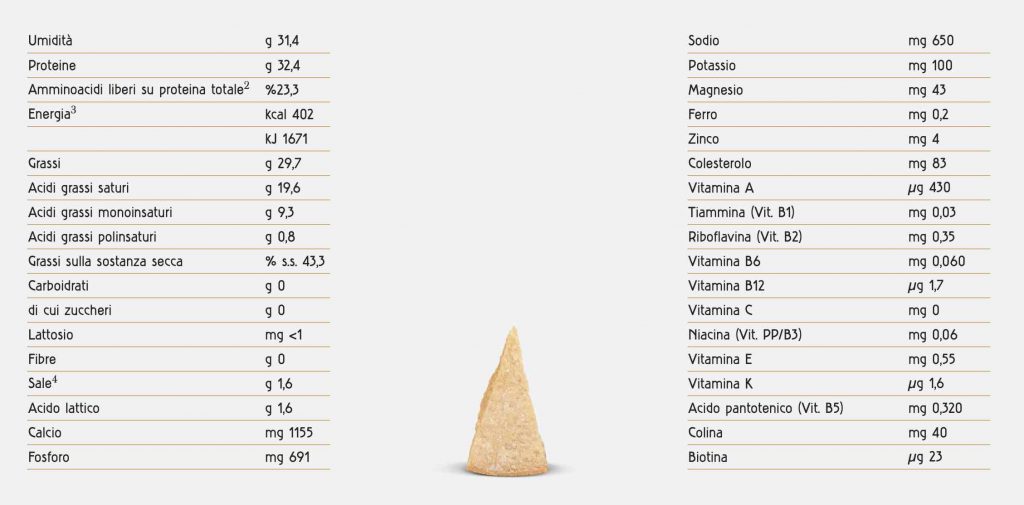
But the quantity of protein is not everything. What also matters is the quality of the proteins contained in Parmigiano Reggiano. These are proteins with high biological value, i.e. rich in essential amino acids. But what is biological value (BV)? We are talking about a parameter for evaluating those proteins that are useful for building muscle mass.
During aging, the enzymes in Parmigiano modify the structure of the main milk protein, casein, fragmenting it into micro-pieces called peptides, from which our digestive system easily extracts essential amino acids.
Now that you know everything about Parmigiano and proteins, if you want to learn more about the relationship between Parmigiano Reggiano and carbohydrates, here is an article that answers another question that many people ask: does Parmigiano Reggiano contain carbohydrates?























