


Parmigiano Reggiano and Grana Padano are very similar cheeses in some ways, but very different in others. They certainly look alike at first glance and are often used in similar ways, but in reality, they hide great differences in processing, taste, consistency, and area of origin. But let's take it one step at a time.
The 6 differences between Parmigiano Reggiano and Grana Padano
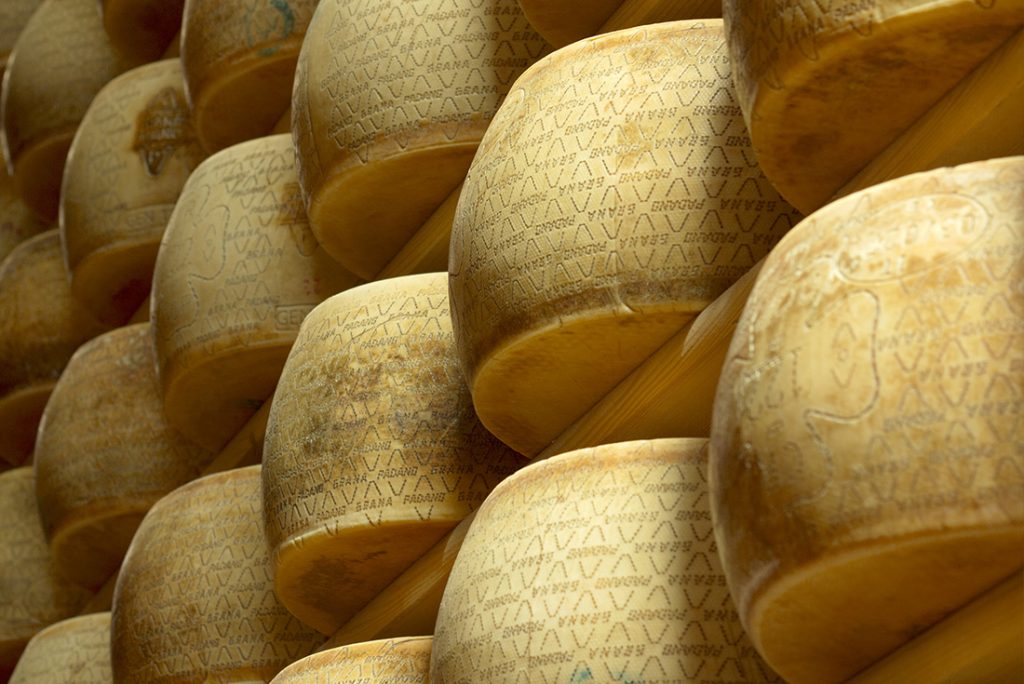
- The first difference is revealed by the name. We are talking about the production area: Grana Padano is produced in 32 provinces located between Lombardy, Trentino Alto Adige, Piedmont, Emilia Romagna, and Veneto. Parmigiano Reggiano, on the other hand, is produced almost exclusively in Emilia Romagna, more precisely between Modena, Parma, Reggio Emilia, and Bologna.
- Another important difference is the ingredients. First of all, the rennet: for Parmigiano Reggiano, it is exclusively of animal origin, while in the production of Grana Padano, rennet of bacterial or vegetable origin is also used. Furthermore, the Parmigiano Reggiano Consortium's production specifications stipulate the total absence of any preservative at any stage of Parmigiano processing, while for Grana Padano, the use of lysozyme, a preservative, is permitted.
- The diet of the cows that produce the milk for the two cheeses is different: in the case of Parmigiano Reggiano, they only eat grass grown in the cheese's production area, while in the case of Grana Padano, the cows' diet can also be supplemented with silage.
- A key point in the production of both is aging, a step in which another difference in approach is identified: the minimum aging of Parmigiano Reggiano is 12 months, and can reach up to 36, while Grana Padano can be marketed after only 9 months of aging, and can reach a maximum of 24 months.
- Still speaking of production, Parmigiano Reggiano can only be processed once a day, while Grana can undergo two daily processes.
- The last difference can be discovered by tasting them: Parmigiano Reggiano is known for its strong flavor, which becomes sharper over time. In its basic aging, i.e., 12 months, the simple notes of milk are still perceived, while in 30 or 36 months, hints of dried fruit and citrus fruits can be discerned. Grana Padano, on the other hand, has a butterier taste, with notes that sometimes recall boiled vegetables or broth.
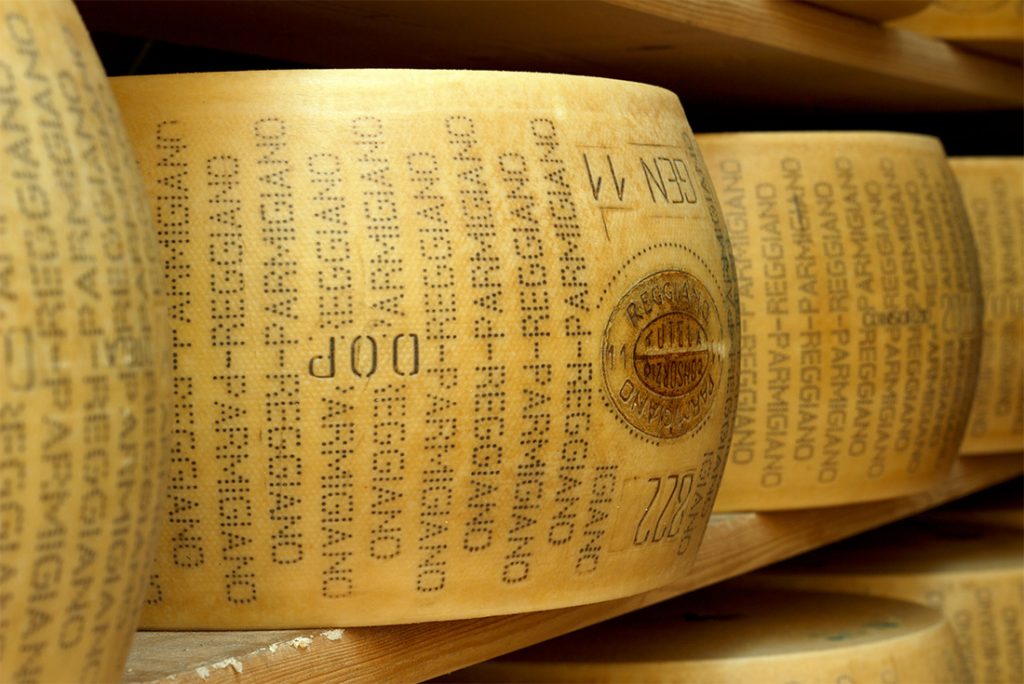
These are the characteristics that distinguish Grana Padano and Parmigiano Reggiano. But do you know how to distinguish a real Parmigiano Reggiano from an imitation? If the answer is no, you absolutely must read our dedicated article.























