


Often, when we think of grated cheese, the kind that traditionally enhances a dish of tagliatelle with ragù, or is an essential ingredient in pasta dishes like passatelli or tortellini, we do so superficially, as if grating one type of cheese or another were the same thing. And we're not just talking about Parmesan and other grating cheeses; we're talking about the different aging periods of Parmesan. Yes, because not all of them are suitable for this process.
So here's the question we're trying to answer today: "Parmesan for grating: how many months should you choose?" Let's find out together!
To understand which Parmesan to grate, we need to start with a premise. Its organoleptic characteristics, as well as its texture, meaning the consistency of this cheese on the palate, change significantly depending on the aging period, which ranges from a minimum of 12 months up to 100 months.
How Parmigiano Reggiano changes with different aging periods
At the end of the first year of aging, Parmigiano Reggiano is predominantly elastic and compact, with only a hint of graininess. The aromatic-gustatory notes are sweet with some acidity and hints of milk, butter, and yogurt.
When it reaches 24 months of maturation, the cheese becomes crumbly and grainy. At the same time, there's an aromatic evolution that reminds us of melted butter, fresh and dried fruit, and a more distinct savoriness on the palate.
Once it reaches 36 months, Parmesan becomes even drier and more crumbly, characteristics that also make it more soluble. The pronounced savoriness is accompanied by aromatic notes that remind us of spices, umami, and once again, dried fruit.
Aging of Parmesan for grating, how many months?
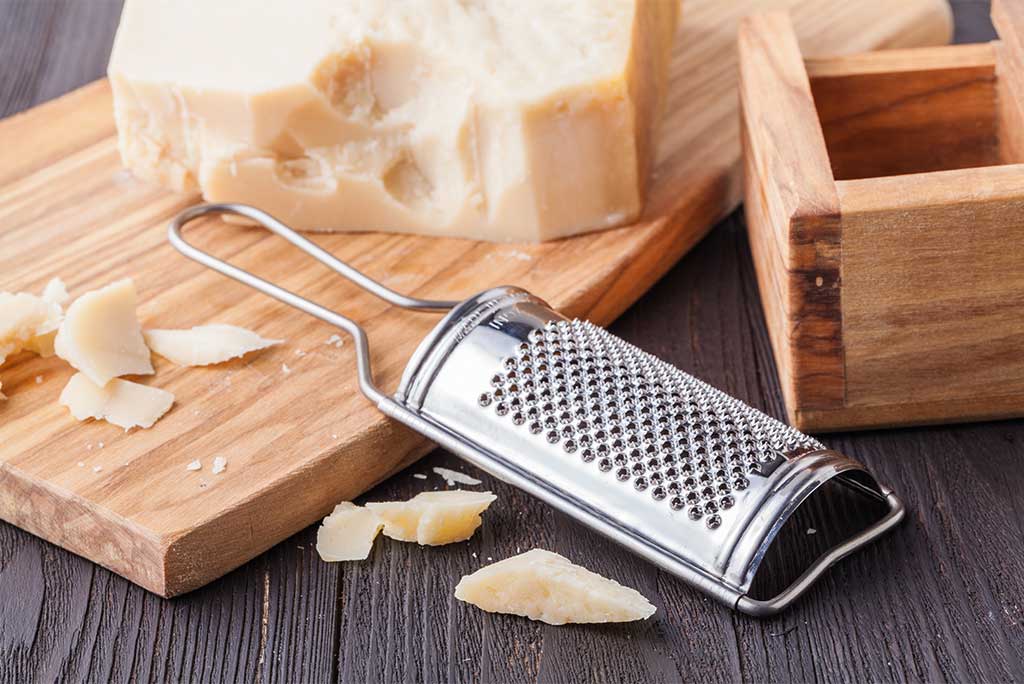
After studying the characteristics of Parmesan at its different aging stages, it's clear that the ideal choice for grating is a 24-month aged Parmesan, especially if we plan to use it as a filling for a typical Emilian-Romagnolan pasta dish; for other preparations where Parmesan needs to melt, such as Parmesan cream, we should preferably choose a 36-month aged one.























