


Pairing the right glass of wine with each dish is a true art, and it becomes particularly interesting when discussing wine and cheese. Based on the type of milk used, the processing, aging, and rind, the variety of cheeses is almost infinite, much like wine, especially in Italy. For this reason, wine and cheese pairing can become a complex and very interesting topic.
Which wine to pair with which cheese
Both wine and cheese are products strongly linked to their region of origin, so first and foremost, we advise you to consider possible pairings between wines and cheeses from the same area. However, in general, to pair a wine with a cheese, one must take into account the fat content and saltiness of the latter. Here are some basic, always valid suggestions:
- With soft cheeses, white wines are recommended. For more delicate types, light and medium-bodied whites can be chosen, while for more assertive cheeses, softer wines, perhaps aged in wood, or aromatic wines like Riesling can be paired, in the case of cheeses with intense aromatic notes.
- For semi-hard cheeses, such as Provolone, Fontina, and Asiago, the advice is to choose a medium-bodied white wine, but if the cheese is more aged, medium-intensity red wines also work very well.
- Long-aged cheeses, which are more flavorful and intense, including Parmigiano or Bitto, should be paired with structured and soft red wines, or at least wines that can stand up to the gustatory and aromatic intensity of the cheese.
- With blue cheeses, such as Gorgonzola or Roquefort, characterized by a very intense and persistent aroma, sweet wines (Sauternes among all) or fortified wines are usually perfect.
Parmigiano Reggiano: which wine to pair?
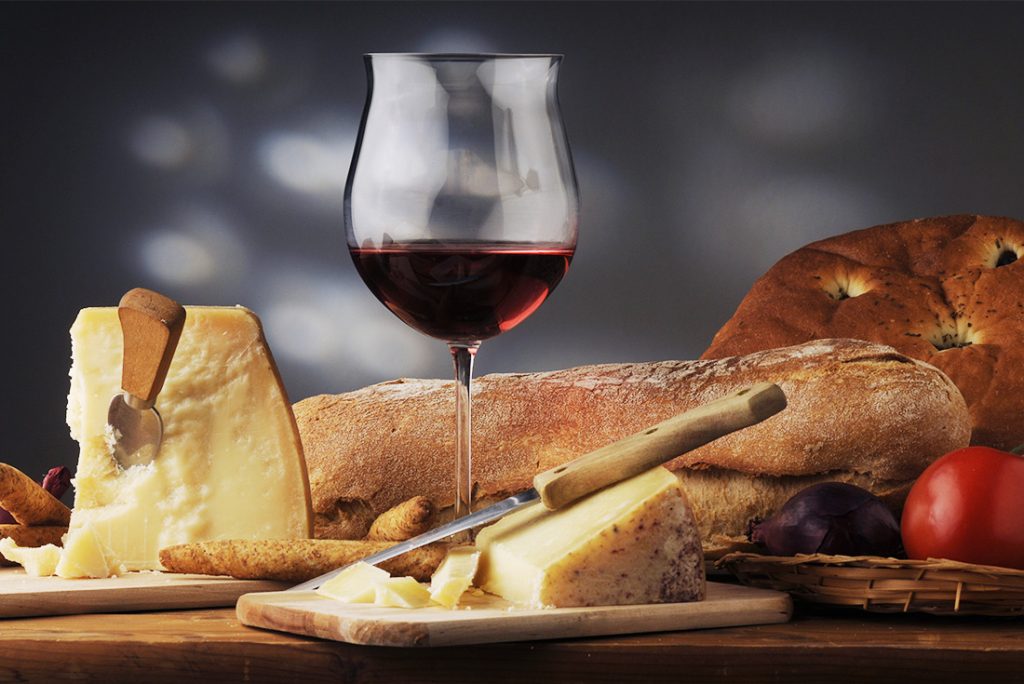
After this summary of wine and cheese pairings, we want to focus on pairings with Parmigiano Reggiano, a cheese we know very well. Below are our top 3 favorite pairings:
- The most classic pairing is undoubtedly between Parmigiano and Lambrusco, particularly from Sorbara: these two products complement each other perfectly, thanks to their common origin. Lambrusco, in fact, is characterized by sustained acidity and a dry, crisp taste. Its subtle body and savory notes perfectly accompany the sharp flavor of Parmigiano Reggiano.
- A medium-aged Parmigiano can also find fertile ground for its aromatic expression when paired with a good Franciacorta, a classic method sparkling wine with notes of ripe and dried fruit that balance the sharper taste of the Parmigiano paste.
- With a very aged Parmigiano, which has an even more intense and persistent flavor, a robust red wine such as a Barbera d'Asti, a Rosso di Montalcino, or even a Barbaresco can also pair well.
Now that you know which wines you should pair with Parmigiano, visit our shop and choose the aging period that suits you best!























