


Quality Trademarks. Let's clarify the difference between DOC and DOP
Almost daily on this blog and our social media channels, we talk about one of Italy's most famous DOPs, Parmigiano Reggiano, the King of Cheeses, one of the symbols of Italian food and wine excellence. However, we have never addressed a topic that often sparks curiosity and confusion: the difference between DOC and DOP. Let's discover together the meaning of these acronyms and what differentiates them.
Food Quality Trademarks
Both DOC and DOP are Quality Trademarks established by the European Union that protect specific agri-food and wine productions. Authorities have created several denominations linked to territorial origin, raw materials, and production methods that protect certain products from counterfeiting both in Italy and abroad. At a European level, Italy is the country with the highest number of "designations of origin and geographical indications" products.
What DOP means
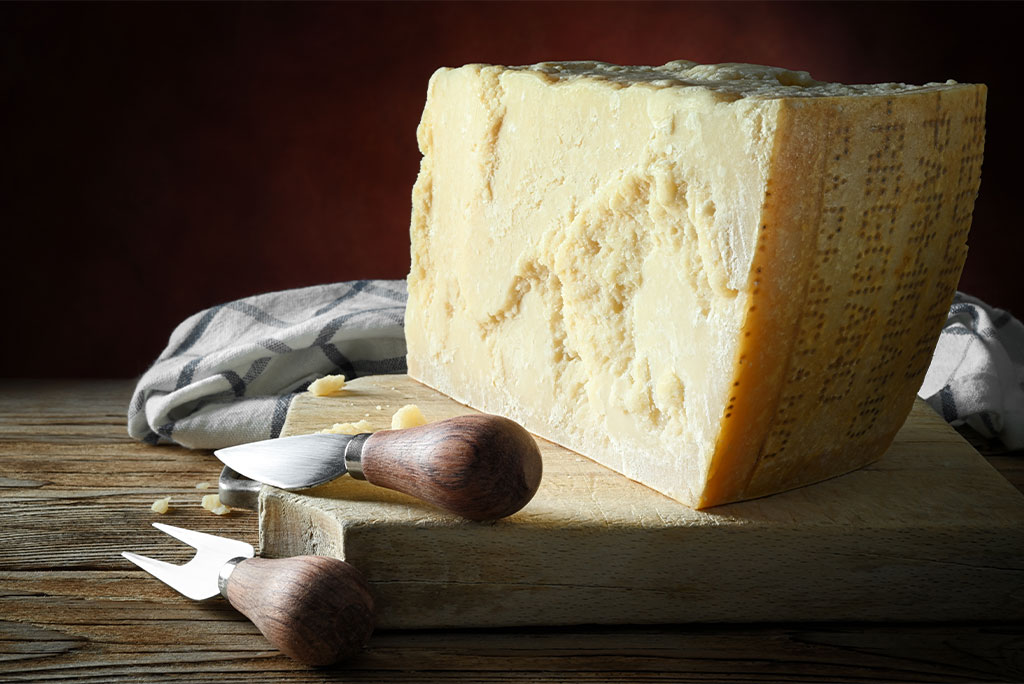
DOP is the acronym for Denominazione di origine protetta (Protected Designation of Origin). As reminded by the Agricultural Policies website, DOP "identifies a product originating from a specific place or region, whose quality or characteristics are essentially due to a particular geographical environment and its natural and human factors, and whose production stages take place in a delimited geographical area." For this reason, Parmigiano Reggiano, to bear the DOP designation, must adhere to a strict set of regulations, starting from the production area and encompassing all stages of activity, from the feeding of the cows to the cheese production standards.
Thanks to this type of designation of origin, high production standards are guaranteed, and consumers are protected from possible counterfeiting.
What DOC means
DOC, on the other hand, is the acronym for Denominazione di origine controllata (Controlled Designation of Origin). It is the trademark historically used for wine productions (along with DOCG, Denominazione di origine controllata e garantita - Controlled and Guaranteed Designation of Origin). DOC wines are those produced in very specific geographical areas, with grapes established by the regulations, and which comply with a series of production and organoleptic parameters. The marketing of wines with Controlled Designation of Origin only occurs after a series of chemical and sensory analyses.
Since 2010—at the European level—the DOC classification has been included in the community category DOP, along with the more restrictive DOCG designation.
Difference between DOC and DOP
The difference between DOC and DOP primarily concerns their scope of application (DOC is specific to wines), and then the exclusively national application of DOC, which at the European level is included within the DOP regulations.
Other quality trademarks
DOP and DOC are not the only European quality trademarks. There are other designations that we often see applied to Italian food and wine products. These include IGP (Indicazione Geografica Protetta - Protected Geographical Indication), a similar but less restrictive trademark than DOP, and STG (Specialità Tradizionale Garantita - Guaranteed Traditional Specialty), a category that covers products distinguished by their characteristics and composition, including certain recipes (such as Neapolitan pizza).
Now that you know everything about the difference between DOC and DOP, all you have to do is experience the exceptional goodness of Parmigiano Reggiano DOP in all its ages, from 12 to 100 months!























